Our Grantmaking Approach
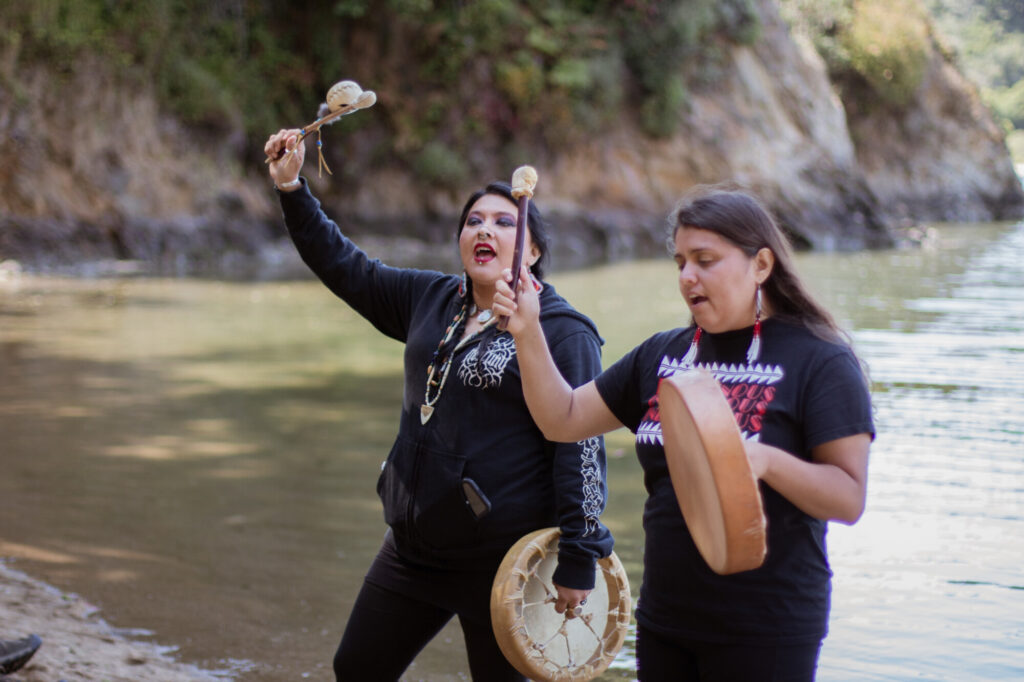
WHO WE FUND
Native Voices Rising funds Native-led grassroots organizations across the United States and its territories, lands that are part of the larger Indigenous homelands of Turtle Island. We support groups engaged in community organizing and movement building to address the root causes of issues that impact Indigenous communities and their sovereignty.
We believe that the communities closest to the problem hold the solutions, and that Native organizers, culture bearers, and community leaders have always been the ones moving our nations forward. Yet grassroots Native-led organizing remains among the most under-funded work in philanthropy. Our grantmaking exists to change that, moving resources directly to the organizations building Native power from the ground up.
We fund a higher percentage of grassroots organizations, but we also partner with a small number of “grasstops” organizations working at a national level.
We refer to the organizations we fund as grantee partners, because we hold these relationships in reciprocal partnership.
To learn more about how we define our criteria for who we fund, dive into our FAQs at the bottom of this page.
Our Relatives, Our Reach
From the Great Plains to the Pacific Islands, our grantee partners are doing the work of healing, sovereignty, and rematriation, nation by nation, community by community.
- Current partners
- Past partners
- Multi-year
We fund work that shapes Native life and sovereignty.
When you become an NVR grantee partner, you join a vibrant community of Native leaders cultivating healing for bright Indigenous futures that benefit all living beings. Most of our grantee partners organize across three or more issue areas at once. Your work doesn’t need to fit into a single box to fit here.
Food Sovereignty & Agriculture
Rebuilding Indigenous food systems from seed to soil to table.
Environmental Justice & Land Stewardship
Defending land, water, and sacred sites; leading climate solutions rooted in traditional knowledge.
Language & Cultural Revitalization
Bringing endangered languages, ceremonies, and lifeways home to the next generation.
Civic Engagement & Political Power
Growing Native voters, leaders, and representation from tribal councils to the United Nations.
Community Safety & Gender Justice
Confronting the MMIWG2S crisis and building survivor-led, community-rooted justice.
Healing & Wellness
Weaving traditional healing with community care to address intergenerational trauma.
Indigenous Economic Justice
Building Native enterprise, financial sovereignty, and economies rooted in tribal values.
Education & Youth Leadership
Raising the next generation of culture bearers, stewards, and decision-makers.
We give two types of grants.
Single-Year Open RFP: Our annual open call for Native-led grassroots organizations. Each year, we invite new and returning applicants to apply for one-year general operating support grants through a culturally supportive application process. Applications are reviewed by Native community reviewers, who make funding decisions by consensus. This is the front door to NVR, where our funding relationships begin.
Invitational Multi-Year Funding Partnerships: Deeper commitments for existing NVR grantee partners. By invitation, organizations that have grown with us through the single-year cycle are welcomed into multi-year funding partnerships, sustained general operating support paired with capacity strengthening and cohort connection, giving organizations the stability to plan, build, and lead on generational timelines.
And grants are just the beginning. At NVR, we walk with our grantee partners for lasting support, transformation, and impact.
Voices from Our Circle
Think your organization might be a fit? Consider applying.
FAQ
This is the question we hear most, so let’s be clear: we fund many kinds of organizing, and it doesn’t have to look like a policy campaign. Native organizing is bringing community members together to take collective action on the issues shaping their lives and sovereignty. That can be but is not limited to:
- Language revitalization that organizes families and speakers
- Land and water protection
- Food sovereignty and seed rematriation work
- Cultural reclamation and ceremony that rebuilds community bonds
- Neighbors organizing to meet needs that systems have failed to meet
- Policy advocacy and corporate accountability campaigns
Native organizing has never fit philanthropy’s categories. A language program is also youth leadership. A food sovereignty project is also land protection, economic justice, and community health. The work our grantee partners carry out weaves across the lines that funding institutions draw because it grows from whole communities and cultural lineages, not program areas.
63% of our grantee partners are engaged in Native Sovereignty work, and most organize across three or more issue areas at once, because Native communities don’t live in silos and neither does their organizing.
Movement building is what happens when organizing connects across communities, nations, generations, and issues. It’s the long work of building collective power: developing leaders, weaving alliances, shifting narratives, and creating the relationships and infrastructure that let Native communities act together at scale. We define power building as knowing our inherent collective strength, honoring Indigenous values, and understanding our respective roles: tribal leaders, youth leaders, matriarchs, medicine keepers, culture keepers, always accountable to our roles and to community.
Grassroots organizations are rooted in, led by, and accountable to the communities they serve, and their work grows from the ground up: community members shaping priorities and taking action together. You can be a kitchen-table volunteer effort or a staffed organization; what matters is who leads, how you share power, and who you work alongside. This is distinct from “grasstops” organizations, which may serve communities but differ in their depth of relationship, governance, and accountability.
Grasstops organizations work on behalf of Native communities at regional or national scale as advocacy groups, policy institutes, national coalitions, and intermediaries whose leadership and accountability sit at the level of the field rather than a specific community base. Their staff and boards are often drawn from professional networks across Indian Country rather than from a single community they organize; their work moves through policy channels, national campaigns, and institutional relationships rather than through a membership base taking collective action.
A majority of the board of directors, governing body, or staff is Native. We prioritize community-based and community-accountable organizations, those whose leadership comes from, and answers to, the Native communities they serve.